 Retirement Planner Guide
Old Age Security (OAS)
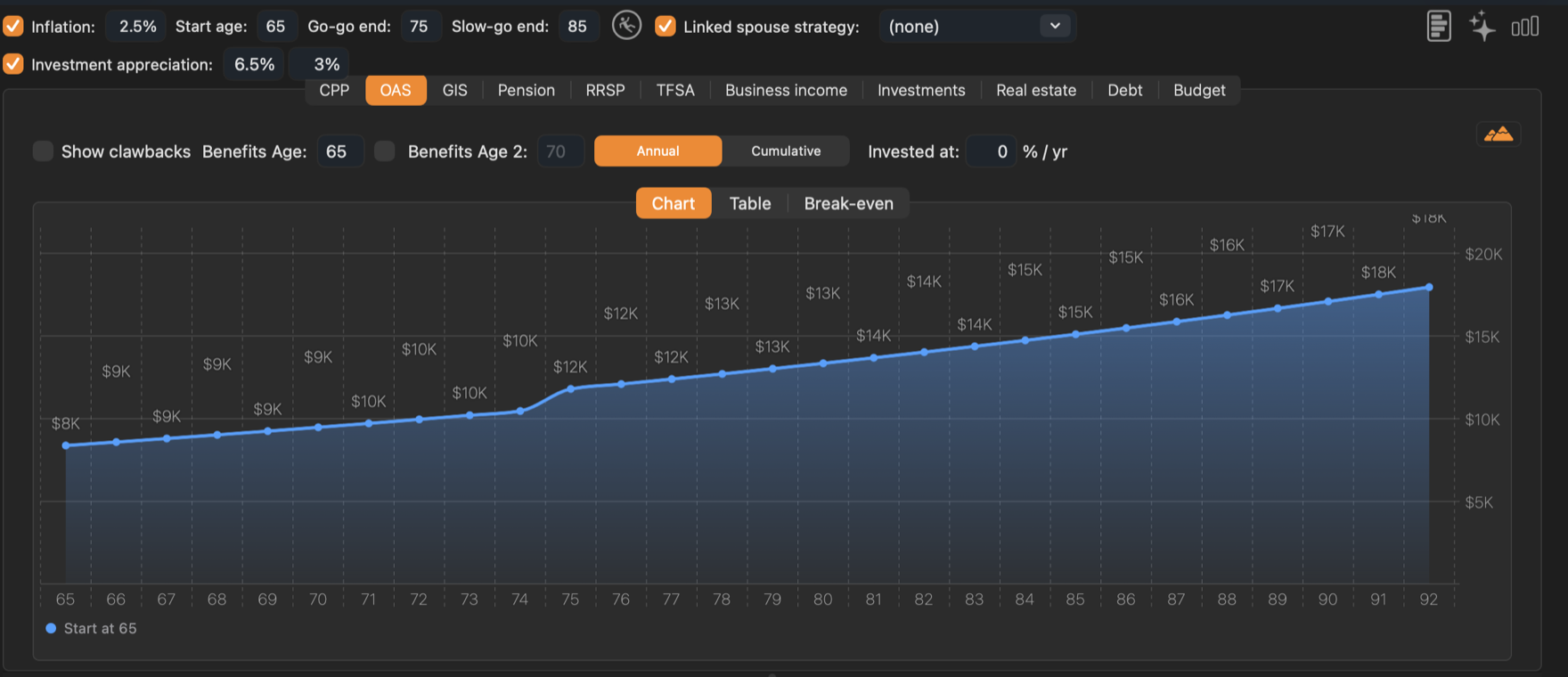
Old Age Security is a monthly pension from 65 for people who have lived in Canada long enough, whatever they earned. The OAS tab projects it, shows what deferring it is worth, and how much the recovery tax — the “clawback” — takes back at higher incomes.
Years in Canada
OAS depends on how long the client lived in Canada after 18. Enter it on the OAS tab of the client’s profile, as Total number of years spent in Canada before age 65.
- 40 years or more: the full pension.
- 10 to 39 years: a partial pension of 1/40 of the full amount for each year.
- Fewer than 10 years: no OAS.
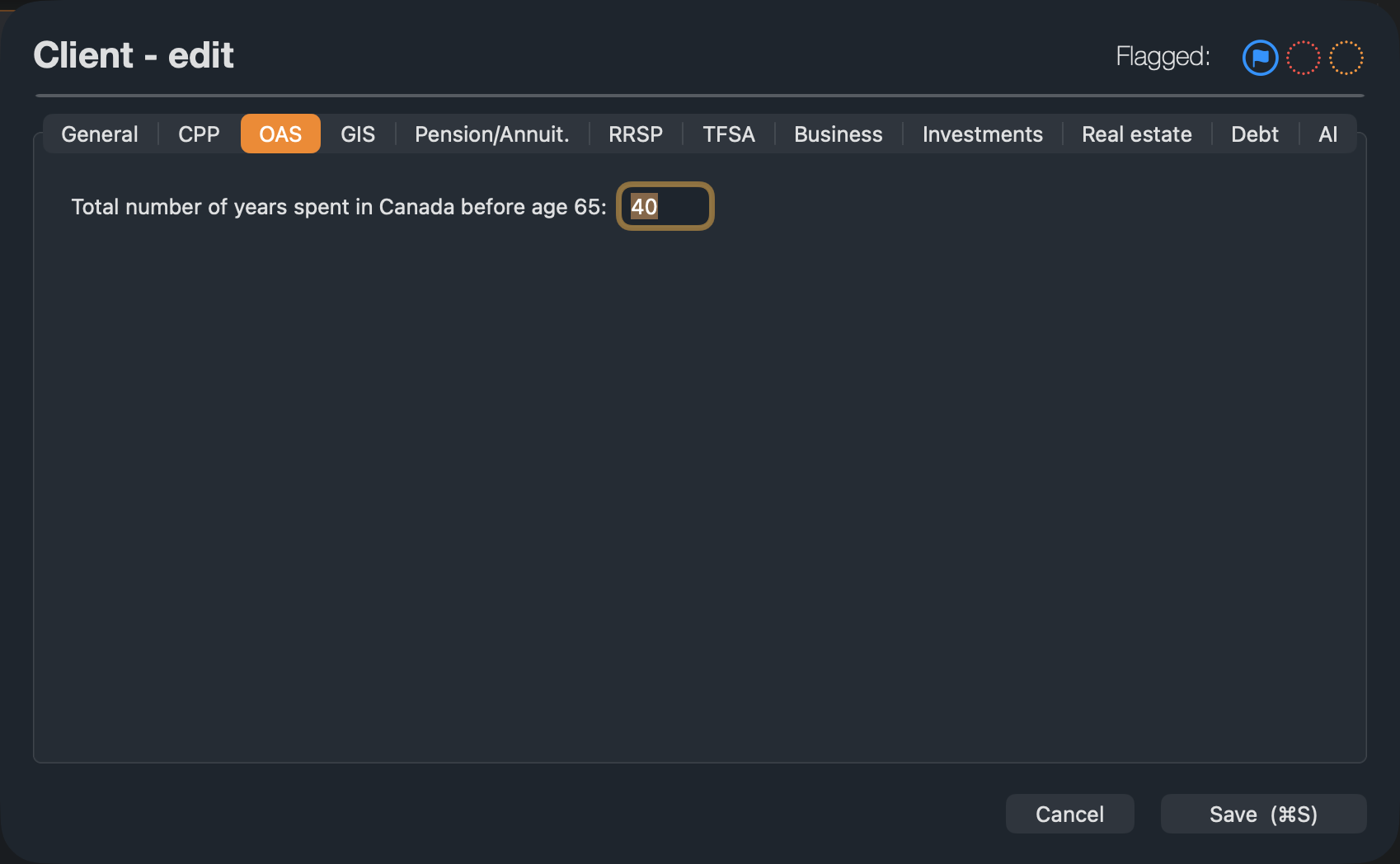
This field is empty for a new client, which means no OAS. Fill it in for every client.
The OAS tab
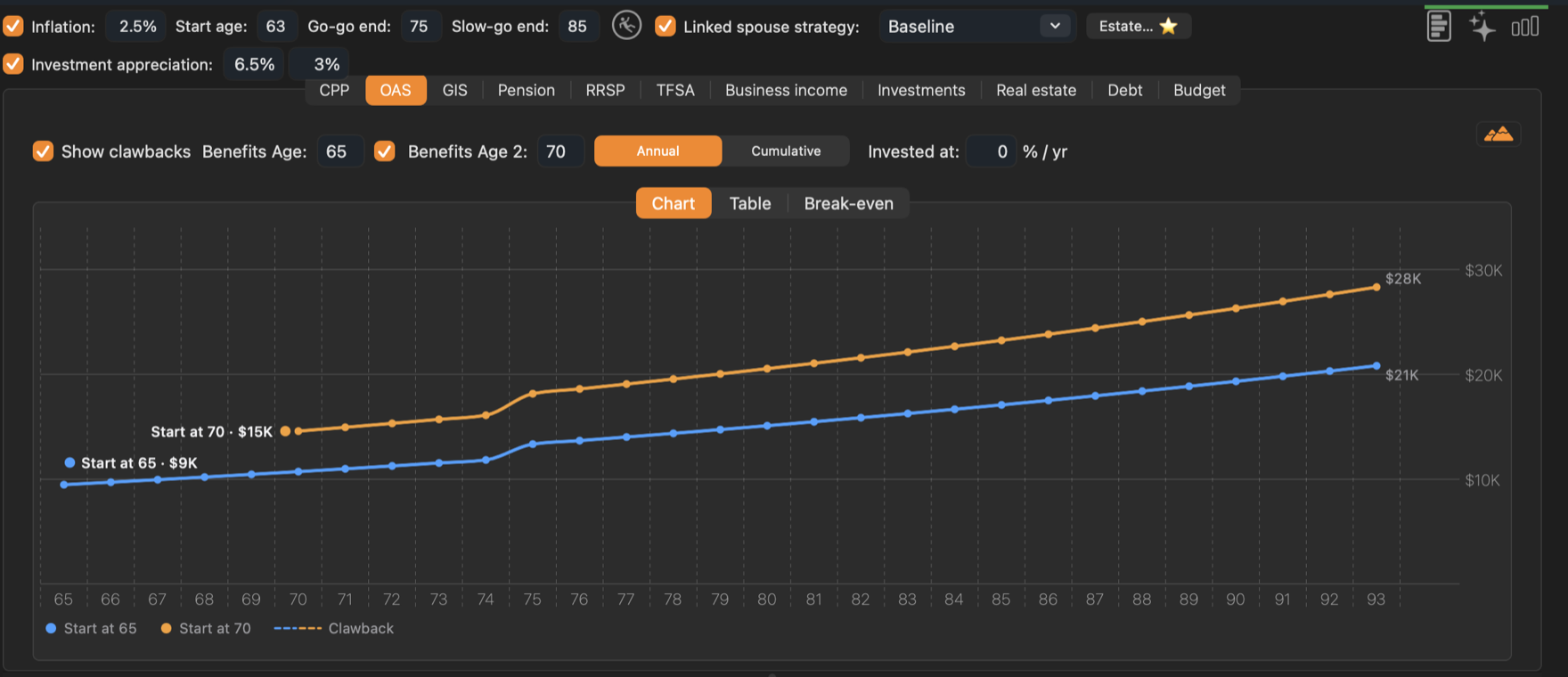
- 1Show clawbacks. Adds a dashed line for the amount clawed back each year.
- 2Benefits Age. The age OAS starts, normally 65.
- 3Benefits Age 2. Tick the box to compare a second start age, up to 70.
- 4Annual / Cumulative and Invested at. Yearly amounts or running totals, and the return used for the break-even comparison.
- Each month OAS is deferred past 65 adds 0.6%, up to 36% more at 70.
- From 75, OAS rises by about 10%, as it does in real life.
- Amounts grow with inflation each year.
Every amount on this tab is after the clawback.
The clawback (OAS recovery tax)
When a year’s net income, OAS included, passes a threshold — $95,323 for 2026, rising with inflation — 15% of the excess is taken back from that year’s OAS, until none is left. Retirement Planner works this out every year from that year’s income.
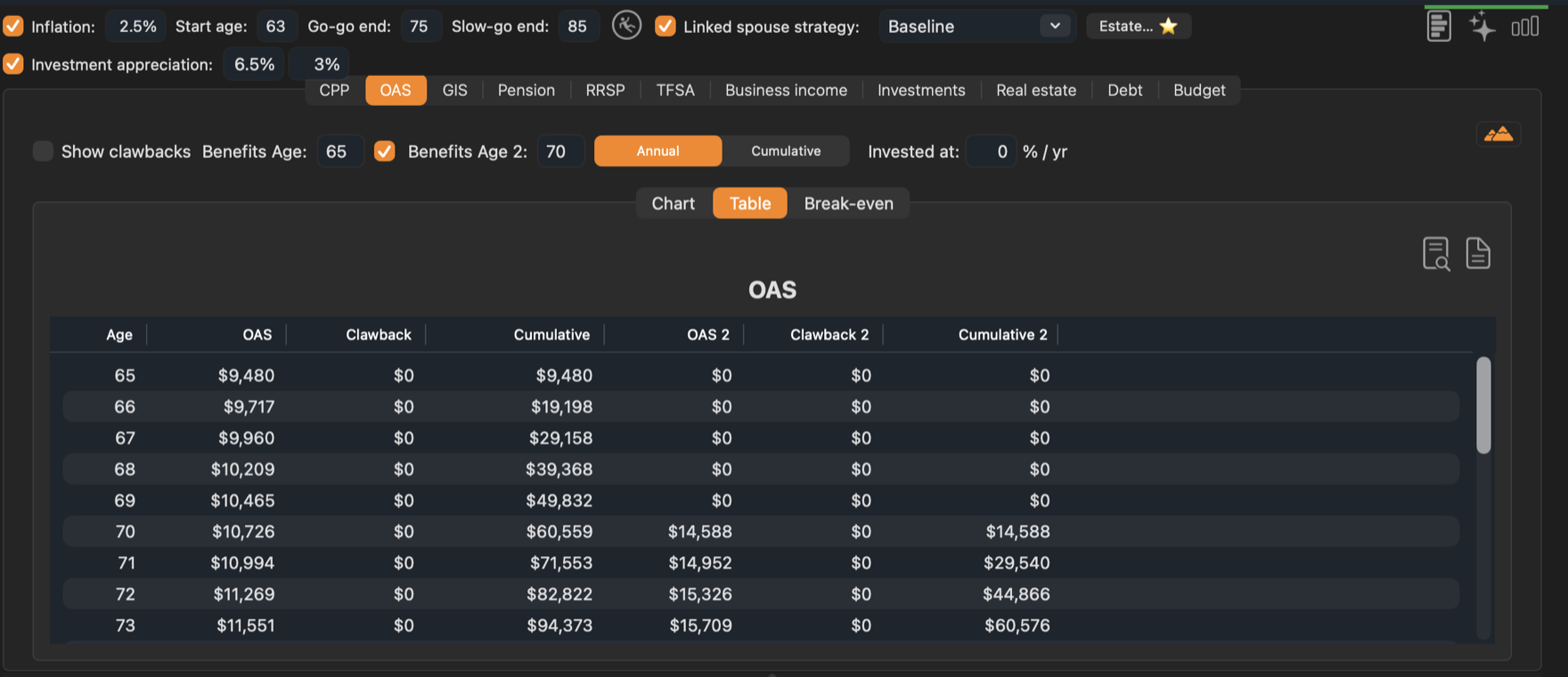
The Table tab shows it year by year in the Clawback column, next to OAS (after the clawback) and Cumulative, with OAS 2, Clawback 2 and Cumulative 2 for the second start age.
Large RRSP or RRIF withdrawals in a year can trigger the clawback. Household mode can lower it by splitting pension income with a spouse, and the Optimize Withdrawal Sequence experiment tries to keep withdrawals under the threshold. See Household mode and Withdrawal experiments.
Break-even
The Break-even tab works like the one on the CPP tab: it finds the age after which the later start stays ahead, using the amounts kept after the clawback.
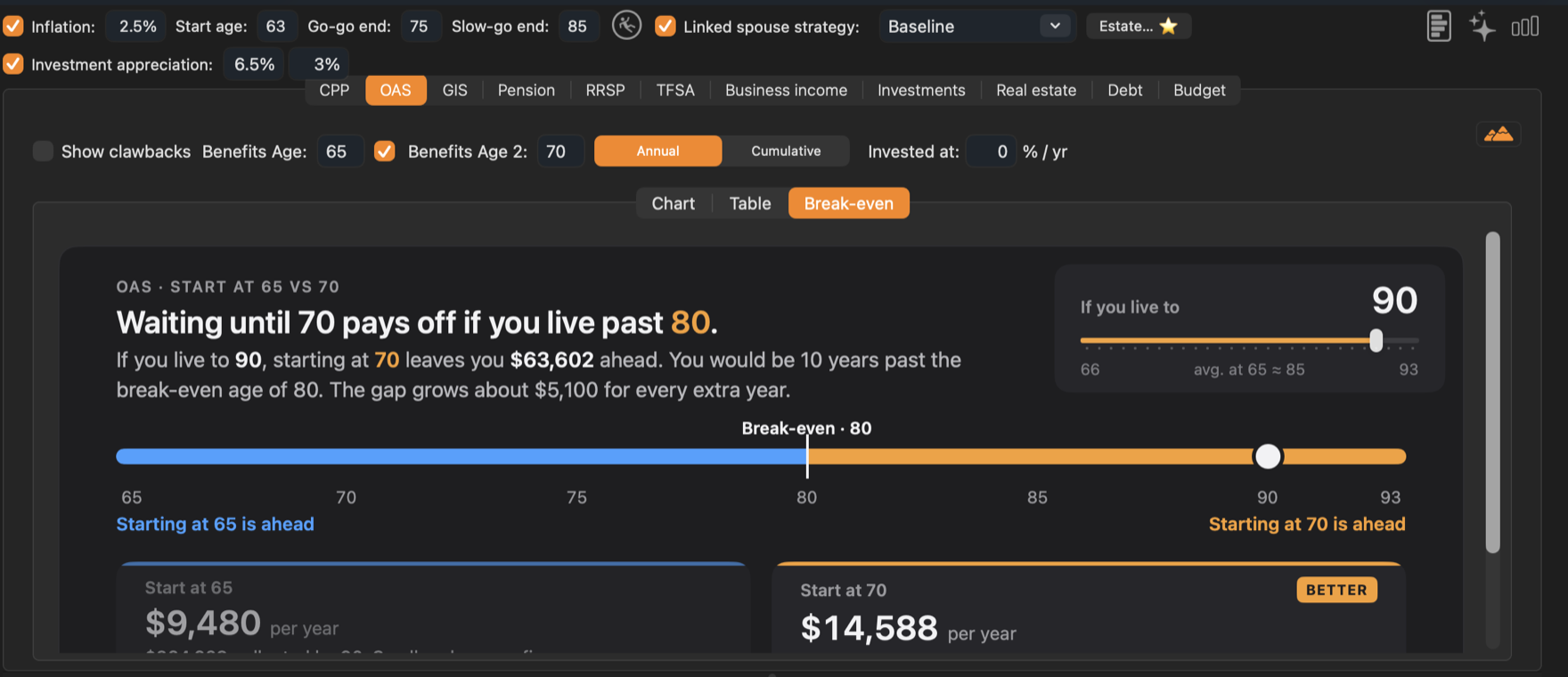
When the clawback takes some OAS, a Kept versus clawed back section compares how much of each option the client keeps over a lifetime. The larger, deferred pension can lose more to the recovery tax. See Break-even on the CPP tab for the slider, the cards and the “Invested at” rate, which both tabs share.
Clients already receiving OAS
For someone who is already collecting, enter the age they started as the Benefits Age. The projection shows the years since then and continues to the planning age. Evelyn Park, 68, has received OAS since 65: