 Retirement Planner Guide
How taxes are estimated
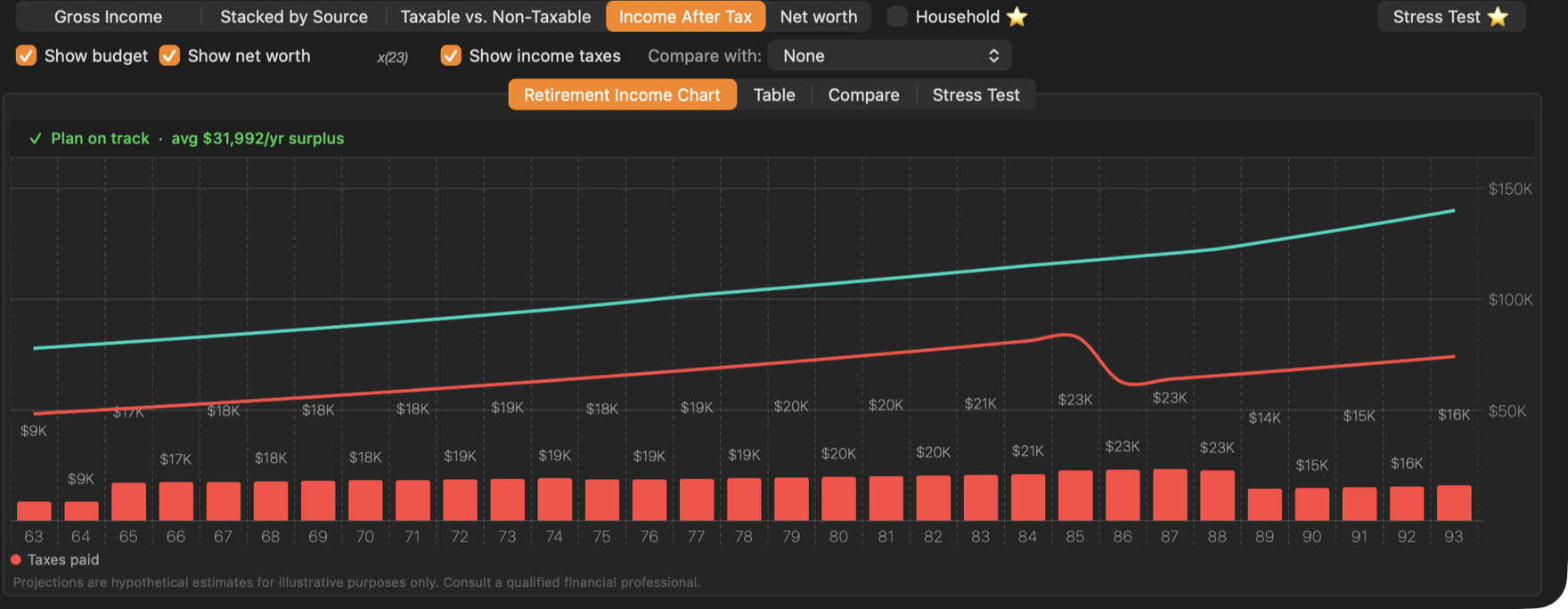
Retirement Planner works out federal and provincial income tax for every year of the plan, so the income after tax it shows is close to what a retiree in Canada would actually have to spend. This chapter explains what is included.
What is calculated
- Federal and provincial tax brackets for the province in the client’s profile: all ten provinces and three territories.
- Basic personal amounts, federal and provincial.
- The age amount from 65, reduced as income rises.
- The pension income amount on eligible pension income: a workplace pension, and RRIF withdrawals from 65.
- Dividend tax credits on dividends paid from a business account.
- Provincial extras such as the Ontario surtax and health premium, and the Quebec abatement.
- The OAS recovery tax (clawback). See OAS.
Taxable income is gross income less the parts that are not taxed: TFSA withdrawals, GIS, non-taxable annuity or other income, and the untaxed part of investment withdrawals. In household mode, each spouse’s tax is worked out separately after the pension split.
Tax years and updates
The app includes the published federal and provincial figures for 2025 and 2026. At most once a week, when the app opens and the Mac is online, it checks for newer figures and downloads them in the background. You don’t need to do anything, and no update to the app is needed.
For years after the latest published figures, brackets and amounts are raised with the strategy’s inflation rate when Inflation is ticked, the way governments index them. Tax rates themselves stay the same.
What is not included
- Credits that depend on personal circumstances: medical expenses, donations, disability, caregiver and similar.
- Capital losses, the lifetime capital gains exemption, and tax on the sale of a property.
- Instalments and refunds: tax is counted in the year the income is received.
Tax figures are estimates for planning. For tax filing or decisions with large tax consequences, talk to a tax professional.